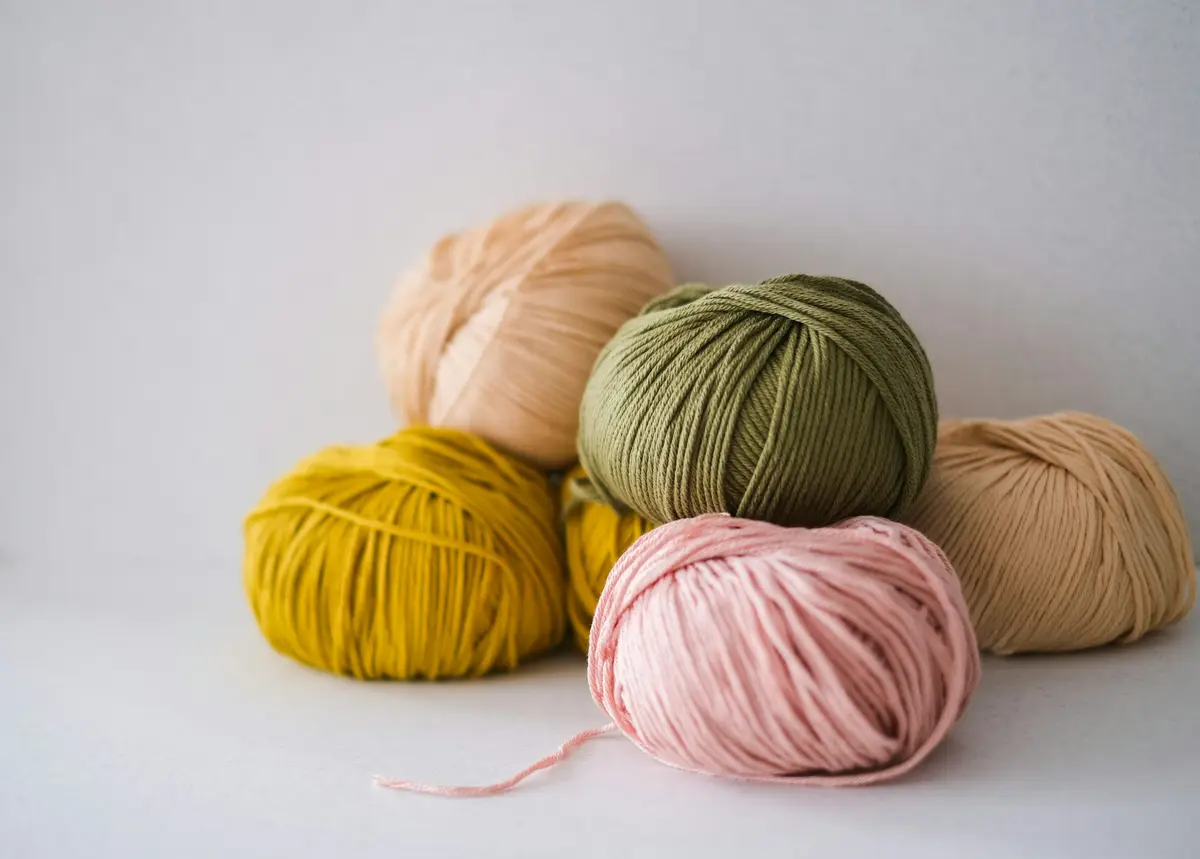
In short
The easiest yarn to learn with is smooth, plied and medium weight (Craft Yarn Council category 4, often labeled worsted or aran), made of wool, a wool blend or acrylic, in a light solid color. It shows every stitch clearly, stretches enough to forgive uneven tension and is comfortable on needles of about 4.5 to 5.5 mm (US 7 to 9).
Choose a smooth, medium-weight yarn in wool, a wool blend or acrylic, in a light solid color. That combination lets you see every stitch, forgives uneven tension and makes mistakes easy to spot and undo. Here is how to recognize such a yarn on the shelf, and how to read its label so you buy the right amount.
What yarn weight is best for beginners?
In knitting, "weight" means the thickness of the strand, not how heavy the ball is. The Craft Yarn Council, a yarn industry association in the United States, sorts yarns into eight numbered categories. Many labels show the number inside a small skein-shaped symbol.
| Number | Category | Names you may also see |
|---|---|---|
| 0 | Lace | lace |
| 1 | Super Fine | sock, fingering |
| 2 | Fine | sport, baby |
| 3 | Light | DK, light worsted |
| 4 | Medium | worsted, aran |
| 5 | Bulky | chunky |
| 6 | Super Bulky | super bulky, super chunky |
| 7 | Jumbo | jumbo |
Many yarns are also sold under British names. The most common are DK (short for "double knitting"), which corresponds roughly to Light (3); aran, roughly Medium (4); and chunky, roughly Bulky (5). Treat these as approximate matches: each category covers a range of thicknesses, and two yarns with the same name can differ a little. Worsted and aran both sit in Medium, with aran usually slightly thicker.
For a first project, choose Medium (4). These yarns are usually knitted on needles of about 4.5 to 5.5 mm (US 7 to 9): large enough to see each stitch, small enough to hold comfortably. Bulky (5) is also a good choice and grows faster. Leave the extremes for later. Very fine yarns (0 to 2) make tiny stitches that are slow and fiddly to work, while super bulky and jumbo yarns need very large needles and make a stiff fabric that is harder to control.
Which fiber is easiest to knit with?
Fiber is what the yarn is made of. It changes how the yarn feels, how much it stretches and how forgiving it is.
Wool and wool blends
Wool is naturally elastic: it stretches and springs back. That elasticity hides small differences in tension, meaning how tightly or loosely you hold the yarn, so your fabric looks more even. Wool also grips the needle slightly, so stitches are less likely to slide off, and it evens out further when washed and dried flat.
Many wools need hand washing. Yarn labeled "superwash" has been treated so it can go in the washing machine; the care symbols will tell you. Blends of wool with acrylic or nylon keep much of wool's springiness and are usually easier to care for. If wool feels itchy to you, try merino, a soft, fine wool, or choose acrylic.
Acrylic
Acrylic is a synthetic fiber. It is affordable, comes in a wide range of colors and is usually machine washable, which makes it practical for practice pieces and for things that will be washed often. It is less elastic than wool and does not respond to blocking (wetting or steaming the finished piece to set its shape) in quite the same way, but a smooth acrylic is perfectly pleasant to learn with.
Cotton
Cotton has very little stretch. Every change in your tension shows in the fabric, and the firm strand can feel hard on your hands after a while. It is absorbent and sturdy, which is why it is the classic choice for dishcloths, but it is easier to enjoy once your tension has settled.
Fibers to save for later
Silk, linen and yarns made from bamboo are often slippery, inelastic or prone to splitting, which is when the needle tip goes through the yarn instead of around it. They make beautiful fabric, but they are not the easiest place to start.
Smooth yarn versus textured yarn
Look closely at the strand. A plied yarn is made of two or more thinner strands twisted together. A smooth, evenly plied yarn gives clear, well-defined stitches and resists splitting.
Avoid these until you can read your stitches easily:
- Fuzzy yarns, such as mohair, have a halo of fine fibers that blurs the stitches. The fibers also cling together, so mistakes are hard to undo.
- Bouclé yarns are covered in small loops that catch on the needle and hide the shape of each stitch.
- Novelty yarns, such as eyelash or ribbon yarns, make it very hard to see where one stitch ends and the next begins.
- Very loosely spun yarns can split easily or drift apart when tugged.
Why light colors make learning easier
Choose a light or medium solid color: cream, pale gray, light blue or soft yellow, for example. You will see each stitch, count rows easily and spot a dropped stitch at once. Very dark colors such as black or navy hide the structure of the stitches, especially under lamplight in the evening.
Heathered yarns, flecked with fibers of a slightly different shade, are fine. Strongly variegated yarns, which change color every few stitches, can make your stitches harder to read.
How to read a yarn label
The label, also called the ball band, tells you almost everything you need to know. Look for:
- Weight: the category name, the number symbol, or both.
- Fiber content: what the yarn is made of, usually in percentages.
- Length and weight per ball: how many yards or meters the ball holds, and how many grams or ounces it weighs. Patterns tell you how much yarn you need; compare by length, not weight, because two yarns of the same thickness can weigh very differently.
- Recommended needle size: usually in millimeters, often also as a US size. Our needle size chart converts between them.
- Gauge: the number of stitches and rows that fit in 4 inches (10 cm), usually in stockinette stitch on the recommended needles. It is often shown as a small grid with a number along each side. British labels may call it tension.
- Care symbols: how to wash and dry the finished item.
- Color name or number, and dye lot.
Care symbols
These are the same small pictures you find on clothing labels:
- A tub of water shows how to wash. A hand in the tub means hand wash only; a number or dots indicate the maximum temperature.
- A triangle refers to bleach.
- A square refers to drying; a circle inside the square refers to tumble drying.
- An iron shows whether the item can be pressed, and how hot.
- A circle on its own refers to dry cleaning.
A cross through any symbol means "do not."
Dye lots: why to buy enough at once
Yarn is dyed in batches, and each batch is given a dye lot number, printed on the label. Two lots of the same color can differ slightly. The difference is often invisible in the ball but shows clearly as a band in the finished fabric where one lot meets the other.
- Check the pattern for the total amount of yarn you need.
- Pick balls that all carry the same dye lot number.
- If you are unsure of the amount, add one extra ball from the same lot.
- Keep one label with your project, in case you need to find more.
What to avoid as a beginner
To sum up, leave these on the shelf for now:
- very fine yarns (categories 0 to 2) and very thick ones (6 and 7);
- fuzzy, bouclé, eyelash and other novelty yarns;
- very dark colors and strongly variegated ones;
- inelastic or slippery fibers such as cotton, linen, silk and bamboo, at least for your very first piece;
- yarn without a label, unless you already know its weight and fiber;
- balls from different dye lots for the same project.
Your first-yarn checklist
- Medium (4) weight, labeled worsted or aran, or Bulky (5).
- Wool, a wool blend or acrylic.
- Smooth and plied.
- A light, solid color.
- Enough balls from one dye lot for the whole project.
What to learn next
With your yarn chosen, match it with the right needles using our needle size chart, then pick one of our easy first projects. If you are just beginning, start here, or browse the library for our books and courses.
Frequently asked questions
What weight of yarn is best for beginners?
Medium weight, Craft Yarn Council category 4, which includes worsted and aran. Bulky (category 5) also works well. Both are thick enough to show your stitches clearly without needing very large needles.
Is acrylic or wool better for beginners?
Both are good choices. Wool is more elastic and forgiving of uneven tension, while acrylic is affordable and easy to wash. A wool and acrylic blend combines many of the advantages of each.
Is cotton yarn good for beginners?
Cotton is not the easiest first yarn. It has little stretch, so uneven tension shows, and it can feel hard on the hands. It is ideal for dishcloths once you feel a little more comfortable.
What does dye lot mean on a yarn label?
The dye lot is a number identifying yarn dyed in the same batch. Different lots of the same color can differ slightly, so buy enough yarn from one dye lot to finish your whole project.
What yarn should beginners avoid?
Avoid fuzzy, textured and novelty yarns such as mohair, bouclé and eyelash yarn, as well as very dark colors, very fine yarn and slippery or inelastic fibers. They hide your stitches and make mistakes hard to fix.
Keep learning
Yarn & tools
Knitting Needle Sizes: US, UK and Metric Conversion Chart
Knitting needle size conversion chart for metric, US and old UK sizes, plus how to choose needle types and materials and match needle size to yarn and gauge.
Patterns & projects
Easy First Knitting Projects That Build Real Skills
Easy first knitting projects in the right order, from dishcloth and scarf to hat, blanket squares and mitts, with what each one teaches and what you need.
Beginner basics
How to Knit for Beginners: The Complete Step-by-Step Guide
Learn how to knit from scratch: the tools you need, how to hold needles and yarn, how to cast on, knit, purl and bind off, and how to fix beginner mistakes.